
Lasix Ban? HISA Has a Vote—But No Aftercare Plan
Over the past several weeks, Repole Stables’ owner and Founder of the National Thoroughbred Alliance (NTA) Mike Repole, Pat Cummings, the Executive Director of the NTA, along with Westlake Racing Stable’s owner Louis Masry, have exposed a troubling reality: the Thoroughbred racing industry’s leadership is falling short on aftercare funding.
What they’ve uncovered also points to something deeper: systemic conflicts of interest at the highest levels of the sport, involving many of its most powerful stakeholders and its regulatory body, the Horseracing Integrity and Safety Authority (HISA).
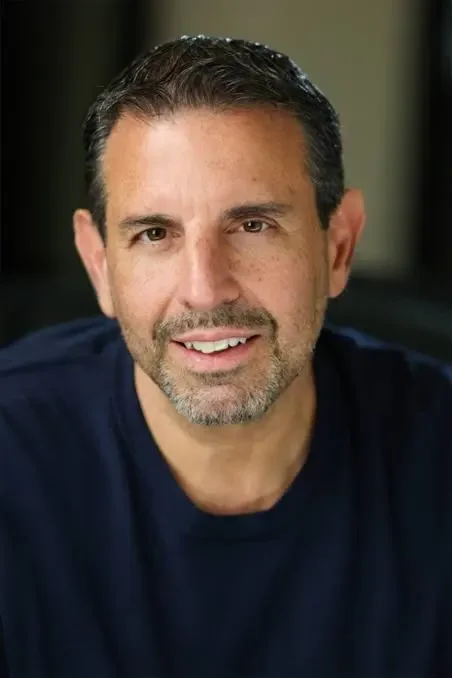
Mike Repole.
Photo Courtesy of Mike Repole.
What they’ve highlighted—through public filings, IRS Form 990s, and direct financial analysis—is a widening gap between what is being collected from owners and breeders and what is actually being reinvested into the horses. It has also raised serious questions about how money is being allocated, including funding tied to HISA, and whether the same small group of organizations and leadership are influencing both policy and the flow of that money.
The numbers are not abstract. They are specific, documented, and impossible to ignore.
And they come at a critical moment.
On May 22, HISA is expected to decide whether to move forward with an industry-wide Lasix ban.
In February, the National Horsemen’s Benevolent and Protective Association (HBPA) President Eric Hamelback, along with esteemed trainers and HBPA members Jena Antonucci, Chad Brown, Mark Casse, Ron Moquett, and Bill Mott, signed and published a letter to the editor in the Thoroughbred Daily News publicly opposing a full Lasix ban, stating clearly that such a ban would not benefit the horse or the industry.
With the decision now coming down to the wire, the elephant in the room is no longer avoidable: what happens to the horses if a Lasix ban goes through?
WHERE THE BIGGEST RISK LIES - AND WHO DECIDES
Under HISA rules, which fall under the Horseracing Integrity and Safety Act—federal legislation included in COVID relief law in 2020 and not voted on by the industry—race-day Lasix is already banned in all stakes races and for two-year-olds, with a 48-hour withdrawal period.
“Those of us who work in barns before sunrise understand that stewardship is not a slogan. It is daily accountability for the health and comfort of an animal that cannot advocate for itself. Preventative medicine is a cornerstone of humane care in every other athletic discipline–human or animal. As such, evidence-based policy is imperative, not symbolic prohibition for welfare of the horse.
Treating pulmonary hemorrhage under veterinary supervision is not doping. It is responsible care.
And in any reform effort, the horse–not the headline–must come first.”
Since then, most jurisdictions have operated under a three-year exemption intended to allow time for study. That exemption expires May 22.
A final decision—whether to extend it or move to a full ban—will be determined by a vote of HISA’s nine-member Board of Directors. To extend the exemption, the vote must be unanimous. If it is not, Lasix will be banned.
The primary risk in a full ban lies not with horses already racing under those rules, but with the population that has always been permitted to run on Lasix.
Roughly 80 to 90 percent of races in North America are claiming and allowance races—the backbone of the sport. The horses that fill them, particularly those age three and up, and especially those five and older, have historically relied on Lasix as a therapeutic medication throughout their careers.
Most non-stakes horses racing beyond age four are typically geldings or horses without breeding value. Their livelihood depends entirely on their ability to compete. Remove that ability, and their risk increases immediately.
For this population, Lasix is not incidental. It is used to manage exercise-induced pulmonary hemorrhage and allow horses to compete safely. As emphasized in the HBPA letter, removing it is not a minor adjustment—it directly determines which horses can continue to run.
Approximately 90 percent or more of Thoroughbred starters in North America have raced on Lasix at some point.
This is not a narrow segment, it is the core racing population.
If that system changes all at once, a meaningful portion of this population does not transition. They exit.
THE DECISION MAKERS - APPOINTED, NOT ACCOUNTABLE
That decision of whether or not to completely ban race day Lasix rests with a group of nine appointed individuals.
Under the structure of HISA, board members are required to have no current financial ties to the horse racing industry—a condition intended to ensure independence. But in practice, it also means the individuals making these decisions are not active participants in the sport.
They were not elected by the industry. They were appointed through a regulatory framework established under federal law. More importantly, some may have never had any meaningful or consequential financial involvement in racing at any point—no ownership, no training operations, no day-to-day responsibility for horses. And in certain instances, these same individuals hold or have held positions within The Jockey Club and/or the Breeders’ Cup, further concentrating influence among a small, interconnected group.
The individuals responsible for voting on the future of Lasix include:
Charles Scheeler — Private equity executive; Chair of HISA
Steve Beshear — Former Governor of Kentucky
Adolpho Birch — Senior Vice President, Tennessee Titans (NFL)
Leonard Coleman — Former President, National League of Professional Baseball Clubs
Joe De Francis — Former CEO, Maryland Jockey Club
Terri Mazur — Retired Partner, Shearman & Sterling LLP
Susan Stover — Veterinarian; Professor of Anatomy, UC Davis
Bill Thomason — Former President/CEO, Keeneland
D.G. Van Clief Jr. — Former Commissioner, National Thoroughbred Racing Association
The backgrounds represented here span finance, politics, law, professional sports, academia, and racetrack administration. But the people who know these horses best—and who take responsibility for them, both during and after their careers—have no direct representation in this decision.
You would not ask an accountant or a lawyer to design training and game-day protocols for a professional athlete. Yet racing is relying on individuals with little to no hands-on experience managing racehorses to make a decision that will directly impact their health, their safety, and their future.
This is not just a gap in perspective, it is a failure of representation.
A SYSTEM ALREADY UNDER STRAIN
Before considering what a ban would trigger, it’s important to understand where the industry already stands.
The sport is not growing. It is contracting.
Foal crops are down. Ownership is consolidating. Since 2020, when HISA was introduced, the number of horses in training and racing has continued to decline. And even with fewer horses, aftercare is already under strain.
“This sport has no future if a small, closed circle continues to control the Jockey Club, HISA, Breeders’ Cup, TOBA, NTRA, and even Keeneland. For decades, owners and breeders have been forced to hand over their data and operate under a system with no real choice and no real recourse.
For the sake of the participants, the fans, and most importantly the American Thoroughbred, let’s hope this is the beginning of the end of the greed, the self-interest, and the incompetence.”
Rescues are full. Facilities are stretched. Independent farms are relying on donations and crowd funding simply to maintain the horses they already have.
At the same time, the financial data tells a different story.
According to publicly available IRS filings, Breeders’ Cup Limited—a 501(c)(6) nonprofit—has grown its investment portfolio from approximately $42 million in 2015 to over $108 million in 2024, an increase of roughly $66 million.
Over that same period, total grants distributed back to the industry amounted to just under $500,000. In 2024, that number was $3,231. Those grants are distributed through its 501(c)(3) arm, Breeders’ Cup Charities.
At the same time, executive compensation over that decade totaled approximately $23.5 million.
Similarly, The Jockey Club has reported aftercare contributions in the range of $1.5 to $2.5 million annually. As Repole has pointed out, those increases appear tied largely to higher fees imposed on owners and breeders themselves.
In other words, the industry is funding its own “donations.”
Masry’s analysis also raised additional concerns, including loans from the Breeders’ Cup to HISA—reported around $2.3 million—with limited transparency around repayment, alongside broader questions about capital reserves exceeding $100 million while aftercare infrastructure remains underfunded.
At the same time, a funding model proposed by Repole and Cummings through the National Thoroughbred Alliance (NTA), designed to generate approximately $20 million annually for aftercare, was never meaningfully reviewed.
This is not a lack of resources or innovation; it is a lack of prioritization.
WHERE HORSES GO WHEN THEIR SAFETY NET FAILS
When capacity runs out, horses do not disappear—they go somewhere.
They move through auctions and into feedlots, are picked up by dealers, and shipped across state lines and across borders. Despite rules intended to prevent it, Thoroughbreds are still regularly found in these pipelines.
Horses are transported from the United States into Mexico and Canada, where slaughterhouses operate, and from Canada exported to countries like Japan for human consumption. These are environments where documented abuse is rife. Others are sent to secondary racing circuits in Puerto Rico and across the Caribbean, where American-bred Thoroughbreds are routinely found running injured, underweight, and neglected. Entire rescue efforts, such as Caribbean Thoroughbred Aftercare, now exist solely to recover these horses.
And some are simply abandoned—left in fields or stalls without the resources to care for them, deteriorating slowly.
This is the reality when capacity runs out. And capacity is already limited.
The United States sees an estimated 170,000 to 200,000 at-risk horses annually across all breeds, yet there are just over 1,300 registered 501(c)(3) equine welfare organizations nationwide.

Louis Masry.
Photo Courtesy of Louis Masry.
In a typical year, registered 501(c)(3) rescues collectively handle approximately 13,400 to 24,000 horses across all breeds—roughly 7 to 12 percent of the estimated 170,000 to 200,000 at-risk horses annually. Thoroughbreds are competing for space, funding, and placement within that same limited pool.
Facilities are already operating at nearly 95 percent capacity, with some regions exceeding 100 percent. And when there is no space, horses do not wait—roughly 20,000 U.S. horses were exported to Mexico and Canada for slaughter in 2022 alone because they could not be absorbed into the domestic system.
And the strain is not limited to the Thoroughbred pipeline.
In 2026, the Bureau of Land Management has indicated it will round up more than 14,000 wild horses and burros, placing additional pressure on the same finite network of rescues, sanctuaries, and private farms already operating at capacity. All breeds are competing for the same limited space, funding, and resources.
Within Thoroughbred aftercare, the Thoroughbred Aftercare Alliance—one of the primary recipients of funding from the The Jockey Club and Breeders' Cup—accredits just 86 organizations operating approximately 175 facilities across North America.
Thoroughbred Charities of America (TCA), largely funded by their annual Stallion Season Auction, awards approximately $1 million annually to aftercare; in 2025, they donated to 63 accredited non-profit aftercare organizations.
These industry-specific funds are wonderful, but even with a shrinking horse population they barely scratch the surface of what is needed to fully fund Thoroughbred aftercare.
“Let’s deal in facts: [There is] $41 million at The Jockey Club and $100 million+ tied to the Breeders’ Cup [in reserves].
That’s $140,000,000+ connected to two organizations at the center of this sport.
And we’re supposed to believe aftercare funding is “complicated”? No. It’s not complicated. It’s a choice. The industry is ready to engage RIGHT NOW.
Nothing happens.
No urgency. No leadership. No movement. Just silence.”
Now consider what happens if even a fraction of the current racing population—particularly the overwhelming majority of horses competing at the claiming and allowance levels, many of whom rely on Lasix to compete—are forced out of the sport at once.
They do not disappear. They enter this system, all at once, with no corresponding increase in capacity or funding.
The impact does not stop with the horses. It extends directly to the people.
Many of the trainers and stables that make up the backbone of this sport operate on thin margins. When a horse bleeds and cannot run, HISA protocols require time off. Without Lasix, those interruptions become more frequent, and the ability to compete—and earn—becomes inconsistent. Owners leave. Stables shrink. In many cases, entire operations fold.
These are not just participants. These are often the same horsemen, without accreditation or recognition, who quietly take responsibility for their horses after their careers end—rehoming them, paying for their care, or stepping in when no one else does. When those stables disappear, that support disappears with them. Another funding pipeline dries up. Another safety net is removed.
So when those horses exit racing, they are entering an already overburdened system at the exact same time the people who would have helped absorb them are being pushed out of the industry.
This is not theoretical. It is mathematical. And that gap is where horses fall through.
By eliminating Lasix, you are not just increasing the number of horses who need to be rehomed, you are simultaneously eliminating the people who would have helped them.
A CALL FOR ANSWERS, NOT SILENCE
This cannot end with another tweet, another press release, or another decision made behind closed doors. If the industry is serious about putting horses first, then the people leading it need to answer for the decisions they are making—and the ones they are avoiding.
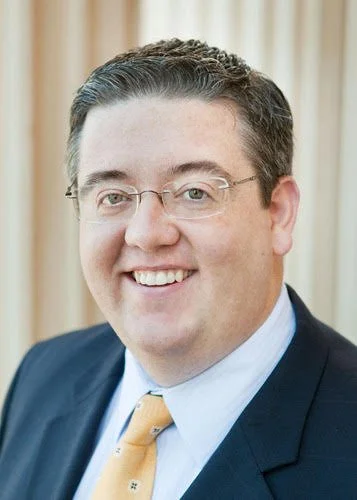
Pat Cummings.
Photo Courtesy of Pat Cummings.
To The Jockey Club, HISA, the Breeders’ Cup:
What is the plan for aftercare? Not a statement. Not a projection. A plan.
Where is the fully funded, scalable aftercare infrastructure that accounts for the current population of horses, let alone the increase that would follow a Lasix ban?
Why has a $20 million annual funding proposal from experienced owners and operators been ignored?
Why are the voices of the horsemen—the ones who care for these horses every day—being ignored and overlooked while policy is shaped by regulators, lawyers, and outside interests?
What safeguards are in place to prevent horses from entering the same slaughter pipelines, feedlots, and foreign circuits we are already failing to keep them out of today?
And if we all agree that horses come first, why do the numbers continue to reflect something else?
These are not rhetorical questions. They are the minimum standard for accountability in an industry built on the backs of these animals.
LET’S ADDRESS THE ELEPHANT IN THE ROOM
The industry is already under strain, and the numbers prove it.
As of 2025, total starts declined to 247,239—down 4.4 percent from 2024—while starts per runner fell another 1.2 percent. Even with Lasix in place, horses are running less.
At the same time, North American public sales increased 2.3 percent year over year to $1.31 billion.
“The conversation around America’s aftercare ecosystem has never been louder.
Funding it and reforming it have been central to Mike Repole’s efforts over the past three years. If our industry cannot align around something as fundamental and humane as aftercare, it raises serious questions about our ability to solve larger, more complex challenges.
A coordinated, nationwide approach can build upon existing foundations, renovating these entities, building much-needed functionality, serving as a hugely positive marketing and engagement outlet for the Thoroughbred industry, while driving demand for retired racehorse purchases, growing value for existing stakeholders and ensuring racing continues for generations.”